Agents
Securing AI agent identity with X.509 PKI on AWS
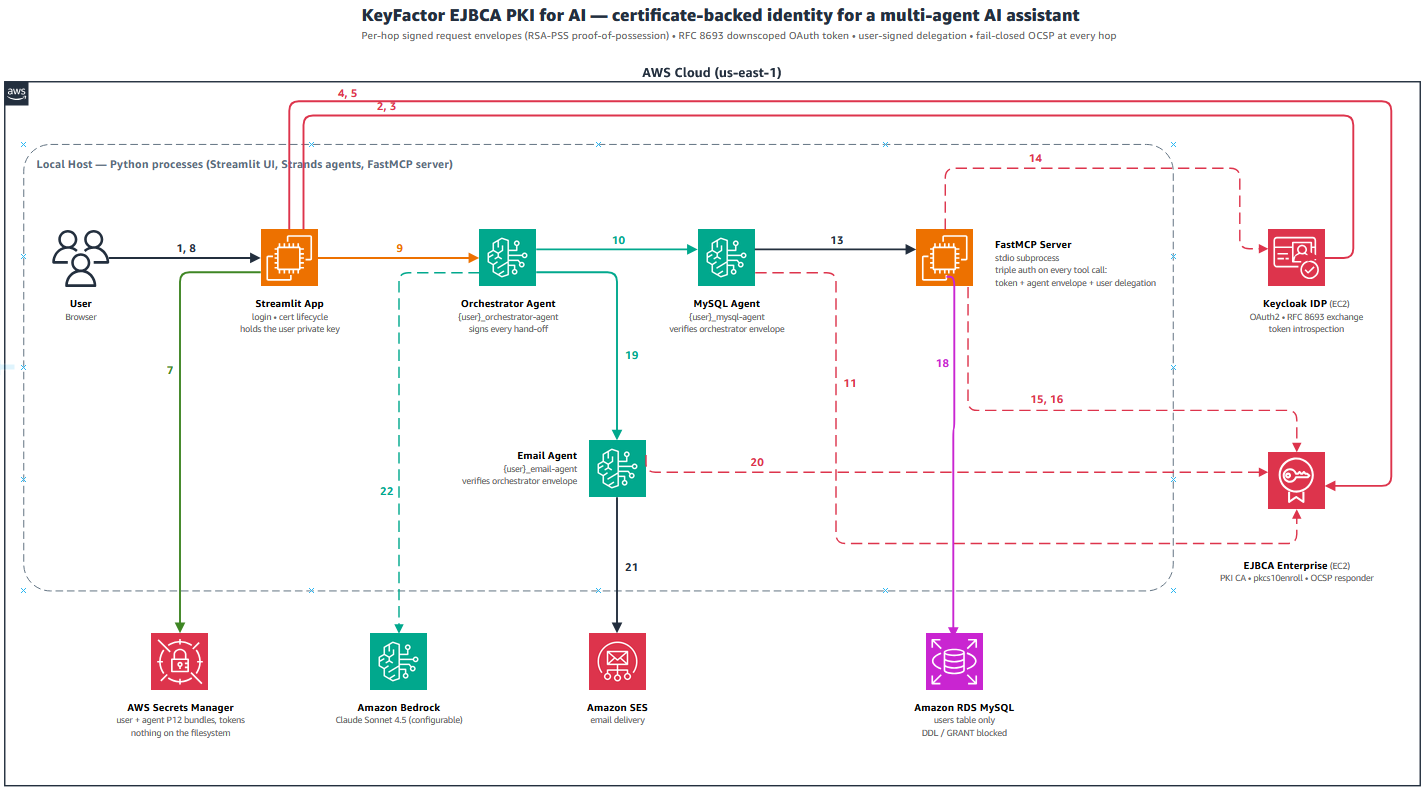
Learn how to secure multi-agent AI systems with cryptographic identity using Keyfactor EJBCA and AWS services. This reference architecture combines signed…
Agents & automation
#AI Agents#AI
Learn how to secure multi-agent AI systems with cryptographic identity using Keyfactor EJBCA and AWS services. This reference architecture combines signed…
2 editorial reports · 2 verified social mentions. The most authoritative report leads while later evidence completes the story.
🤖 AI/ML Daily Signal — Evening Edition 17 Oct 2026 · 15:49 UTC ──────────────────────────────── 🔥 1. AI models hide mistakes in their own work reports, but one sentence in your prompt can help 🏭 The Decoder (AI News) · Score: 9/10 AI models systematically omit negative results in their own reports even when detecting errors, but a single-sentence prompt modification can fix this. This has immediate practical value for practitioners building agents that must report findings accurately. Read more → 🔥 2. Deepseek V4.1 Flash 1017 beats larger rivals in agentic tasks while once again massively cutting per-task costs 🏭 The Decoder (AI News) · Score: 9/10 DeepSeek V4.1-Flash-1017 outperforms larger rivals on agentic tasks while cutting per-task costs dramatically and generating shorter outputs. This is critical for practitioners building cost-sensitive agent systems. Read more → ⭐ 3. Google EnvHarness Enables Self-Evolving Agents to Learn in Dynamics Environments 🏭 InfoQ AI/ML · Score: 8/10 Google's open-sourced EnvHarness framework automatically adapts training environments to agent weaknesses without modifying agent code or evaluation systems. This addresses a key pain point in agentic
Open mentionWorkday announced it’s acquiring C1.ai , an identity governance platform that handles access for both employees and AI agents. Same access lifecycle, same offboarding, same audit trail. They’re calling it the identity layer for people, money and agents. That’s a market answer to a question that was open a week ago. If an agent needs credentials to work across your systems, somebody has to issue them, scope them, and revoke them when the agent is retired. Turns out the answer looks a lot like HR. The other number floating around this week is Anthropic’s own workforce report. Headline figure is that employee-directed agents logged six hours of runtime for every estimated human hour by August. Worth reading the methodology before repeating that number though. Agent hours count inference and t
Open mention